Showing posts with label cinéma. Show all posts

Monday, March 28, 2016

Andrey Zvyagintsev / Андрей Звягинцев

The best Russian director of today, in my opinion.

Leviathan / Левиафан (2014)

Левиафан - морское чудовище, упоминаемое в Ветхом Завете. Книга Иова 40:20-41:26

"Можешь ли ты удою вытащить левиафана и веревкой схватить за язык его?
 Вденешь ли кольцо в ноздри его? проколешь ли иглою челюсть его?
 Будет ли он много умолять тебя и будет ли говорить с тобою кротко?
 Сделает ли он договор с тобою и возьмешь ли его навсегда себе в рабы...

 Надежда тщетна: не упадешь ли от одного взгляда его?..."

Сюжет праведника Иова, подвергаемого испытаниям, но не утратившего веру, трансформируется в картину противостояния отдельно взятого человека и неподконтрольного ему государства, изначально призванного защищать и оберегать его, но в нынешней российской жизни, бесчинствующего и грабящего.


Для съемок режиссер выбрал Кольский полуостров, село Териберка с его дикой красотой, с некой даже сохранившейся первозданностью. Помимо Териберки дополнительные съёмки были проведены в других городах Мурманской области (Кировск, Мончегорск, Оленегорск)

Алексей Серебряков в роли Сергеева
Главный персонаж - "маленький человек" Николай Сергеев, автослесарь, пытающийся противостоять коррумпированной системе.


Значительное место в фильме занимает церковная проблематика, отпадение России от Бога, роль Русской Православной Церкви в идеологической охране государства (роль, которую в советское время играл КГБ)


В youtube я нашла интервью Звягинцева с Познером. Честный, думающий человек.


Thursday, March 17, 2016

Life in Russia in the 90s : D'Est


1993: Chantal Akerman is travelling through Eastern Europe to Russia.

Au bord de la fiction..

Just a series of slow images from across Russia; amazingly long tracking shots of people waiting in never-ending queues; static images of people in their pitiful apartments, clearly staged; empty winter landscapes..

There's no dialogue. We only hear heavy silences and people occasionally make comments or ask questions in Russian while the camera passes by. Сними меня... Зачем вы снимаете, это что интересно... По телевизору показывать будут.. Какая программа, через час что ли... Что снимаем... Бардак снимаете...  А чего снимать? Надо спрашивать... А мы ответим чего надо... Я участник войны, инвалид второй группы, целый час не могу уехать... Может улыбаться надо, нет... And we see people's faces. They speak louder than words.

The film is a comment on how lost Russia was at that moment in history after the fall of communism – a lifetime of one ideology was suddenly gone, and nothing new had yet taken its place. People's faces show it all: confusion, embarassement, shame, vulnerability..

Песня Окуджавы в исполнении Жанны Бичевской запала в душу.

Wednesday, January 27, 2016

Joseph Mankiewicz's world

After Alfred Hitchock, Orson Welles and a bit of Ken Russell, I've started watching and discovering Joseph Mankiewicz's cinema world.

1. The Ghost and Mrs. Muir (1947) is a love story of a young widow who finds her seaside cottage is haunted and forms a unique relationship with the ghost.


2. A Letter to Three Wives (1949)

One of the funniest and truest commentaries on married life. The three wives receive a letter stating that Addie Ross (whom we never see) has run off with one of their husbands... but which one?

This is a delightful film with fine performances all around and some of the best dialogue. The script is creatively brilliant. Celeste Holm's voice as a narrator (Addie Ross) is just hypnotizing.


3. House of Strangers is a 1949 film noir starring Edward G. Robinson, Richard Conte and Susan Hayward.

The film starts by Max Monetti leaving the prison and promising revenge on his brothers for their betrayal. Brilliant Edward G. Robinson plays Gino Monetti, the Italian immigrant, a rags-to-riches banker who runs his bank and his family with an iron fist.

Another well-written script and excellent actors!

The three mean brothers

Richard Conte as Max Monetti and Susan Hayward as Irene Bennett

Brilliant Edward G. Robinson as Gino Monetti

4. No Way Out is a 1950 racial drama. Sidney Poitier plays the young intern doctor. Richard Widmark as "the white trash" gives a performance of a pathologically obsessed racist. Linda Darnell plays perhaps the most interesting role because she switches back and forth, unable most of the time to figure out what side to take..

It's an excellent and daring film for its time.

Richard Widmark, Linda Darnell and Sidney Poitier

5. Suddenly, Last Summer is a 1959 mystery film based on the play of the same title by Tennessee Williams.

In 1930's New Orleans, a wealthy and eccentric older woman (Katharine Hepburn), wants a surgeon (Montgomery Clift) to perform a lobotomy on her niece (Elizabeth Taylor), for reasons that become clear toward the end of the film.

This macabre story involving homosexuality, incest, pedophilia, and even cannibalism must surely have been a shock to audiences in 1959.

Young and beautiful Elizabeth Taylor

Katharine Hepburn and Montgomery Clift

There are still two Mankiewicz's films on my desk: Cleopatra (1963) and There Was a Crooked Man (1970) and I'd like to find All About Eve (1950) which is considered as one of his best.

Sunday, January 24, 2016

Women in Love (1969)


Women in Love, the adaptation of D. H. Lawrence's novel, is the first Ken Russell's film I've seen. It follows the loves and lives of two sisters and two men in a mining town at the beginning of the 20th century. They are played by Glenda Jackson, Jennie Linden, Alan Bates and Oliver Reed.

Alan Bates and the fig


This is a very special film, striking and highly sensual.


It has many unforgettable scenes. One of them is Alan Bates at a picnic describing how to eat a fig. Another, famous one is the nude wrestling of two friends. Glenda Jackson's dancing in front of the bulls is brilliant !!

Glenda Jackson

Thursday, January 21, 2016

F for Fake

When the flush of a new-born sun fell first on Eden's green and gold,
Our father Adam sat under the Tree and scratched with a stick in the mould;
And the first rude sketch that the world had seen was joy to his mighty heart,
Till the Devil whispered behind the leaves, "It's pretty, but is it Art?"
 
from The Conundrum of the Workshops by Rudyar Kipling


F for Fake (1973) is the last film made by the great magician and myth-maker Orson Welles.

It's a supremely entertaining movie packed with ideas, twists, surprises and fun. It is about art, about forgery, about what's real and what's not. One of the main characters is a famous Hungarian art forger Elmyr, who is said to have sold over a thousand Matisses, Modiglianis, Picassos, etc. to famous art galleries all over the world. And it's simply amazing watching him effortlessly reproducing the paintings of great masters..


The film is a fake documentary and is known for its unusual, ahead of time editing style.


Welles the narrator is an absolute delight. 

Wednesday, January 20, 2016

I do not know who I am... Extraordinary Mr Arkadin...


At times chaotic, crazy but a truly extraordinary film!

Mr Arkadin is Orson Welles 1955 film heavily butchered (even more than The Magnificent Ambersons) by the producers.

What fascinates me about the film are the eccentric characters from Arkadin's past. Akim Tamiroff as a down and out thief, Mischa Auer and the flea circus master scene, Katina Paxinou, the ruthless woman who had run a criminal gang in Europe and now lived with her ugly husband in Mexico, Michael Redgrave with his antique junk shop in Amsterdam..

Mischa Auer as the owner of a flea circus

Then there's a memorable insane masquerade ball with huge masks and people running, dancing and laughing all over the place.

The rocking boat scene with Patricia Medina stumbling around the room, giggling and taunting Mr Arkadin is incredible.

Probably the only weakness of the film is Arden's poor performance as the investigator of Arkadin's past.

And now I'm going to tell you about a scorpion. This scorpion wanted to cross a river, so he asked the frog to carry him. No, said the frog, no thank you. If I let you on my back you may sting me and the sting of the scorpion is death. Now, where, asked the scorpion, is the logic in that? For scorpions always try to be logical. If I sting you, you will die. I will drown. So, the frog was convinced and allowed the scorpion on his back. But, just in the middle of the river, he felt a terrible pain and realized that, after all, the scorpion had stung him. Logic! Cried the dying frog as he started under, bearing the scorpion down with him. There is no logic in this! I know, said the scorpion, but I can't help it - it's my character. Let's drink to character. 

Tuesday, January 19, 2016

The Stranger by Orson Welles (1946)


Loretta Young as a brand-new wife of professor Rankin

Well, as you can see from title, after a series of Alfred Hitcock's movies, I'm moving on to a new one on Orson Welles's gems.

Edward G. Robinson as Mr. Wilson

Orson Welles as Rankin/Kindler

In The Stranger (1946), an investigator from the War Crimes Commission travels to Connecticut to find an infamous Nazi. Orson Welles as Rankin/Kindler and Edward G. Robinson, who plays the investigator, are brilliant. Konstantin Shayne as Meinike (I'm travelling for health, I'm travelling for health..) is unforgettable either.

Konstantin Shayne as Konrad Meinike

Monday, January 18, 2016

The Age of Loneliness

It's worse than obesity, worse than smoking 15 cigarettes a day...

The British film-maker, Sue Bourne in her latest documentary, The Age of Loneliness, has turned her attention to loneliness. Though the majority of the interviewees are older widows and widowers, The Age of Loneliness is not just about getting older, there are younger people affected by the pressures of social media, mental illness, divorce and separation.

'...People of all ages missed someone to do nothing with. To chat idly. To sit next to...'

I've read a couple of interviews with Sue Bourne about making the film on the film offical website and about trying to identify 10 reasons for loneliness in the Guardian.


The Magnificent Ambersons


In the cinematographic world, Orson Welles's follow up to Citizen Cane, The Magnificent Ambersons (1942) is almost unanimously considered as "one of the greatest tragedies in the history of the cinema" and viewing it in its present state is compared to "looking at the Venus Di Milo, or at a beautiful Greek vase that has been shattered.."

Although the film suffered butchery, it still remains a piece to admire: Orson Welles's mesmerizing voice as the narrator, the touching final credits which he reads, the story of the downfall of the upper-class family in America as it enters the industrial age, the funny opening sequence on changing fashion, the ball scene, the beautiful cinematography of Stanley Cortez, Agnes Moorehead as Fanny, Joseph Cotten's speech at the dinner table about the automobile..


I'm not sure George is wrong about automobiles. With all their speed forward they may be a step backward in civilization. May be that they won't add to the beauty of the world or the life of the men's souls, I'm not sure. But automobiles have come and almost all outwards things will be different because of what they bring. They're going to alter war and they're going to alter peace. And I think men's minds are going to be changed in subtle ways because of automobiles. And it may be that George is right. May be that in ten to twenty years from now that if we can see the inward change in men by that time, I shouldn't be able to defend the gasoline engine but agree with George - that automobiles had no business to be invented. 

I'll certainly add Booth Tarkington's novel the film is based on to my reading list this summer.

Thursday, December 31, 2015

My best of 2015


The best movie I saw: I've been watching and re-watching a lot of Hitchcock's films lately so the best ones that come to my mind immediately are his Shadow of a Doubt (1943) and Sabotage (1936). I'll certainly add Woody Allen's latest film that came out in 2015 - Irrational Man.


Shadow of a Doubt, 1943

Sabotage, 1936

Sabotage, 1936


Irrational Man, 2015

The best book I read: I haven't read much in 2015, I must sadly confess.. The only productive time was the summer vacation in St Michel Chef Chef with 3 Russian classics the most remarkable of which was definitely Ivan Goncharov's Oblomov.


The best dish I cooked or tasted (or both): Well, I haven't been to any exquisite restaurants this year so I'll be talking about the recipes I tried out in my kitchen. The most successful dessert will be Banana and Apple Crumble (the recipe in French is here). As for the salty chef-d-oeuvre.. I'd say that I got really good at making salt tarts this year and my whole-wheat dough is a delight!


The best thing I bought: I bought a steam cooker which I use a lot for cooking vegetables now and I really love this new taste!

Mine looks exactly the same..

The best place I saw: A hard one since I haven't travelled a lot this year.. My best memory would be the mountains around Bagnères-de-Luchon.

The best thing I did or that happened to me:
I started teaching at the English Department of the Université Jean-Jaures at Mirail.

The best gift I gave or received (or both again): The subscription to the Time magazine that I received for Christmas from JM's uncle (not the first time but it made me as happy).


The issue I received this morning


The best thing I created: I've been sewing a lot and I'm proud of finally making my first quilt (not the real gorgeous Amish-like quilt but its much simpler version)

My first quilt

Friday, January 24, 2014

Yokatta! Yokatta!

Je vous ai parlé de Yuki dans mon post sur le Japon et vous l'avez vu dans Visage/Visite/Voyage II. Pour ce Noël elle nous a annoncé une petite nouvelle : elle va se marier au printemps.


Yokatta! Yokatta! / Quel bonheur enfin
est un nouveau projet de film de JM. Cette fois il le présente sur touscoprod, une platforme de financement participatif/crowdfunding dédié au cinéma et à l'audiovisuel. Si vous avez envie de savoir plus, de soutenir ce projet, de devenir co-producteur ou de le partager avec vos amis, venez ici. Pour toute question ou renseignement, n'hesitez pas à me contacter. Merci beaucoup à l'avance !

Monday, January 6, 2014

An Affair to Remember

Tonight I feel like telling you about one of the most romantic love affairs of all times: An Affair to Remember / Elle et lui (in French)


A 1957 film starring Cary Grant and Deborah Kerr and directed by Leo Mac Carey. An absolutely beautiful film with two beautiful stars. As the name suggests, it's a love story. And there's a lot of humour and just marvelous scenes. Here are the ones you can't forget :

1. Visiting Nickie's grandma


2. The ship arrives in New York and they're meeting their fiancées


3. The final scene "Darling, don't look at me like that"


Saturday, December 7, 2013

Je vous parle des plus beaux films du monde...


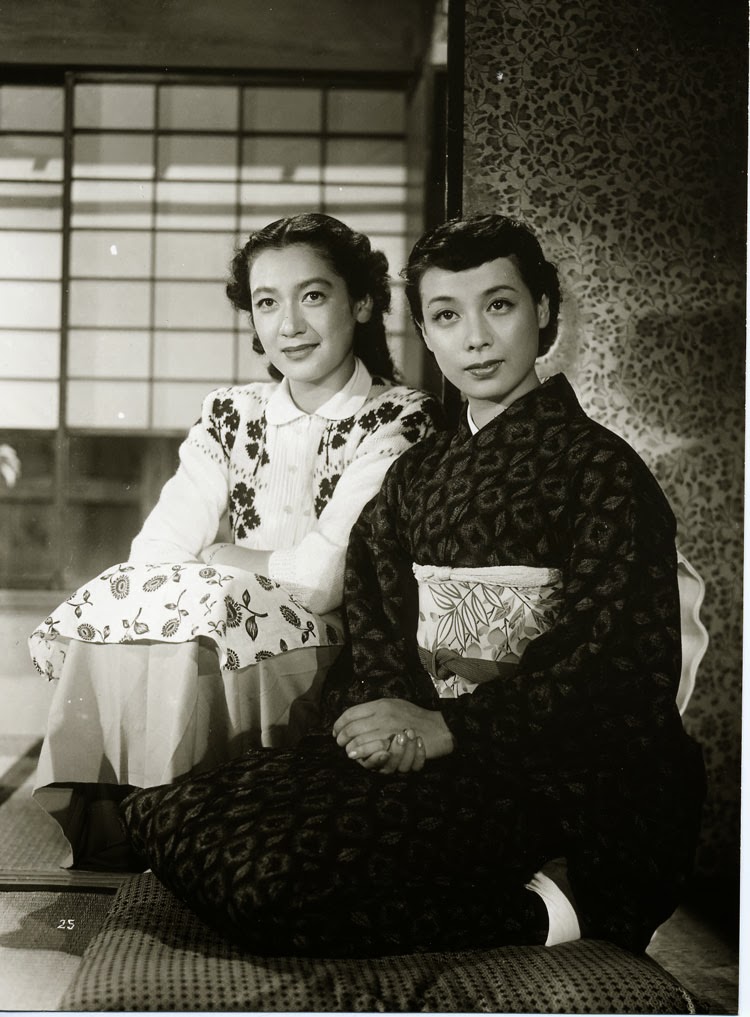
Equinox Flower

"Je vous parle des plus beaux films du monde. Je vous parle de ce que je considère comme le paradis perdu du cinéma. A ceux qui le connaissent déjà, aux autres, fortunés, qui vont encore le découvrir, je vous parle du cinéaste Yasujiro Ozu. Si notre siècle donnait encore sa place au sacré, s’il devait s’élever un sanctuaire du cinéma, j’y mettrais pour ma part l’œuvre du metteur en scène japonais Yasujiro Ozu…Les films d’Ozu parlent du long déclin de la famille japonaise, et par-là même, du déclin d’une identité nationale. Ils le font, sans dénoncer ni mépriser le progrès et l’apparition de la culture occidentale ou américaine, mais plutôt en déplorant avec une nostalgie distanciée la perte qui a eu lieu simultanément. Aussi japonais soient-ils, ces films peuvent prétendre à une compréhension universelle. Vous pouvez y reconnaître toutes les familles de tous les pays du monde ainsi que vos propres parents, vos frères et sœurs et vous-même. Pour moi le cinéma ne fut jamais auparavant et plus jamais depuis si proche de sa propre essence, de sa beauté ultime et de sa détermination même : de donner une image utile et vraie du 20ème siècle". 

Wim Wenders about Yasujiro Ozu in his 1985 documentary Tokyo Ga.


A Hen in the Wind
I watched Ozu's Good morning / Bonjour (1959) some years ago and Tokyo Story / Voyage à Tokyo (1953) quite recently but my Ozu obsession started last month after I saw some of his finest films created after World War II : A Hen in the Wind / Une poule dans le vent (1948), Equinox Flower / Fleurs d'équinoxe (1958), The Flavour of Green Tea over Rice / Le goût du riz au thé vert (1952), Early Summer / Eté Précoce (1951). His films are simple, contemplative, edged with nostalgia and sadness. There are no heroes or villains, no wild successes or great failures, his characters are ordinary people leading ordinary lives. Marriage and family relationships are among his major topics.

Early Summer


Wednesday, November 13, 2013

"V . . . . E" aka Visage/Visite/Voyage II


"Elles sont arrivées au crépuscule. Toute la durée de leur séjour le ciel fut clair, la ville clémente et le temps propre à mener une vie douce et amicale..."

JM has finished his 8-minute film which he shot with Yuki and Francesca while they were here in September.


I posted his first "V . . . . E" aka Visage/Visite/Voyage with Zhenya here.

Thursday, October 10, 2013

"V . . . . E" aka Visage/Visite/Voyage

Le film vidéo de JM qui a participé au concours du 14e Rendez-vous du Carnet de voyage et dont j'ai parlé ici, n'a pas gagné le premier prix, loin de là. J'ai jeté un oeil sur la vidéo qui a reçu une mention et j'étais vraiment déçue, tellement il est inintéressant et peu créatif...


Dans "V....E" une jeune étudiante en médecine offre son visage à la 'science' du cinéma, un visage comme paroi chamanique, comme voyage cinématographique par excellence, passeur d'un monde à l'autre, visuel et sonore.


Sunday, September 8, 2013

The funniest filmmaker you've never heard of...

For me Pierre Etaix was a happy discovery. His films are inventive, his characters are delightful, his humour is gentle.

He made his directing debut with Rupture (1961), an 11-minute short in which a man receives a breakup letter from his sweetheart, who sends him back his photo, in pieces. Watch him struggle with the fountain pen, desk, paper, stamps and inkpot as he's trying to reply.


This was followed by Happy Anniversary (1962), a more elaborate effort in which he tries to pick up flowers and a bottle of wine to bring home to his wife but has to reckon with rush-hour traffic and a chronic shortage of parking places. Happy Anniversary was a big success, winning an Oscar award for best short film.


Étaix’s first feature, The Suitor (1962), was a smash hit in France and an art-house success all over the world. Other films received mixed reviews but in my opinion, they're all worth seeing, there's always something to enjoy, to discover, to be surprised at.

Legal disputes with producers however kept his films out of distribution for over thirty years. In 2009, a petition signed by 56,000 people (including Woody Allen, Jean-Luc Godard, and David Lynch) led to the restoration of his films to the public view.


Le Grand Amour de Pierre Etaix

Le Grand Amour (1969) is unusual and surreal at times. It's light and charming. There are a lot of funny gags but this one surpasses them all :--)

Le soupirant / Воздыхатель


Before I tell you about this brilliant comedy directed by and starring Pierre Etaix I'd like to start with the word 'soupirant' (suitor). Here's what I found at Parler Au Quotidien :

Le soupirant, mot aujourd’hui presque toujours ironique, c’est celui qui soupire, qui aspire, qui désire après sa belle. Le soupir est l’image sonore et pulmonaire, d’un manque. Le soupirant est donc celui qui n’a pas ce qu’il veut, et le mot est en fait très chaste : le soupir, paradoxalement, désigne le désir inassouvi plus que le désir récompensé. Le soupirant, cet amoureux aux petits soins, prévenant et respectueux qui attend qu’on lui dise oui...

The Russian воздыхатель (suitor, wooer) has the same connotations : it's the one who courts a woman, yearns after her silently, sighs, his longing is fervent though respectful. It's an old-fashioned term for an admirer, a lover.


The film is Etaix's first feature film. It's a homage to silent comedy and notably to Buster Keaton. It's fresh, tender, gentle, dreamy, poetic and extremely funny. Visually it's full of creativity and innovation. Somebody called it "une petite merveille de poésie lunaire". You'll love it, I promise.

Нежный, нежный воздыхатель,
О певец любви и неги!

Ты когда бы лишь увидел

Столько нимф и столько милых,

Без вина бы и без хмелю

Ты во всех бы в них влюбился...
 

Державин (1791)

Monday, August 26, 2013

Kalmouks


Avant le 20 septembre JM doit finir son court métrage pour le "Prix du Carnet de Voyage Numérique" organisé par l'association "Il Faut Aller Voir" et VIDEOFORMES. Zhenya, une jeune Kalmouk, qui JM filme pour ce projet m'a fait penser à Pouchkine.


Прощай, любезная калмычка!
Чуть-чуть, на зло моих затей,
Меня похвальная привычка
Не увлекла среди степей
Вслед за кибиткою твоей.
Твои глаза конечно узки,
И плосок нос, и лоб широк,
Ты не лепечешь по-французски,
Ты шелком не сжимаешь ног;
По-английски пред самоваром
Узором хлеба не крошишь,
Не восхищаешься Сен-Маром,
Слегка Шекспира не ценишь,
Не погружаешься в мечтанье,
Когда нет мысли в голове,
Не распеваешь: Ma dov’è,
Галоп не прыгаешь в собранье...
Что нужды? — Ровно полчаса,
Пока коней мне запрягали,
Мне ум и сердце занимали
Твой взор и дикая краса.
Друзья! не всё ль одно и то же:
Забыться праздною душой
В блестящей зале, в модной ложе,
Или в кибитке кочевой?

(1829)